



Observer Local News
Ormond Beach Observer
Neighbors
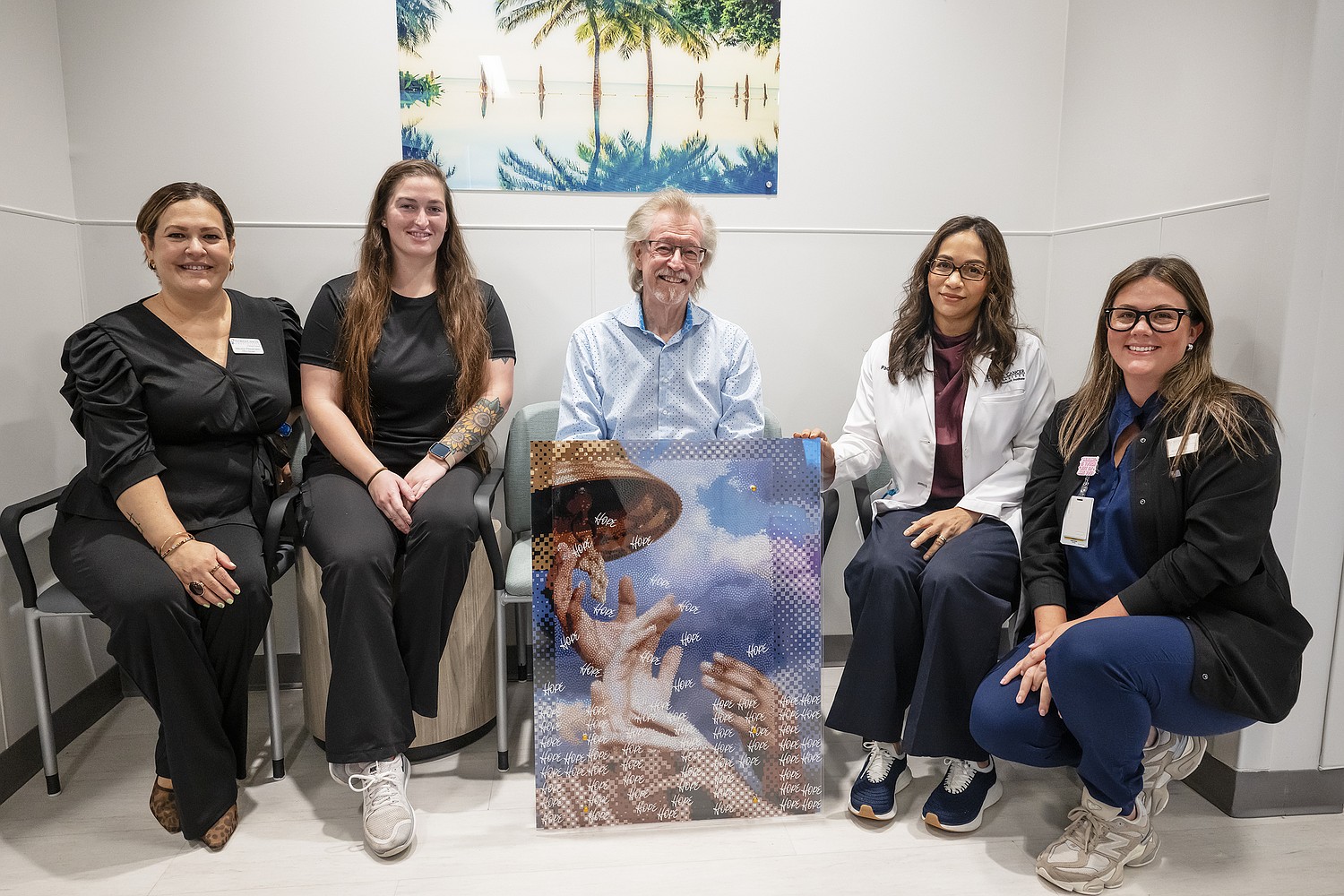
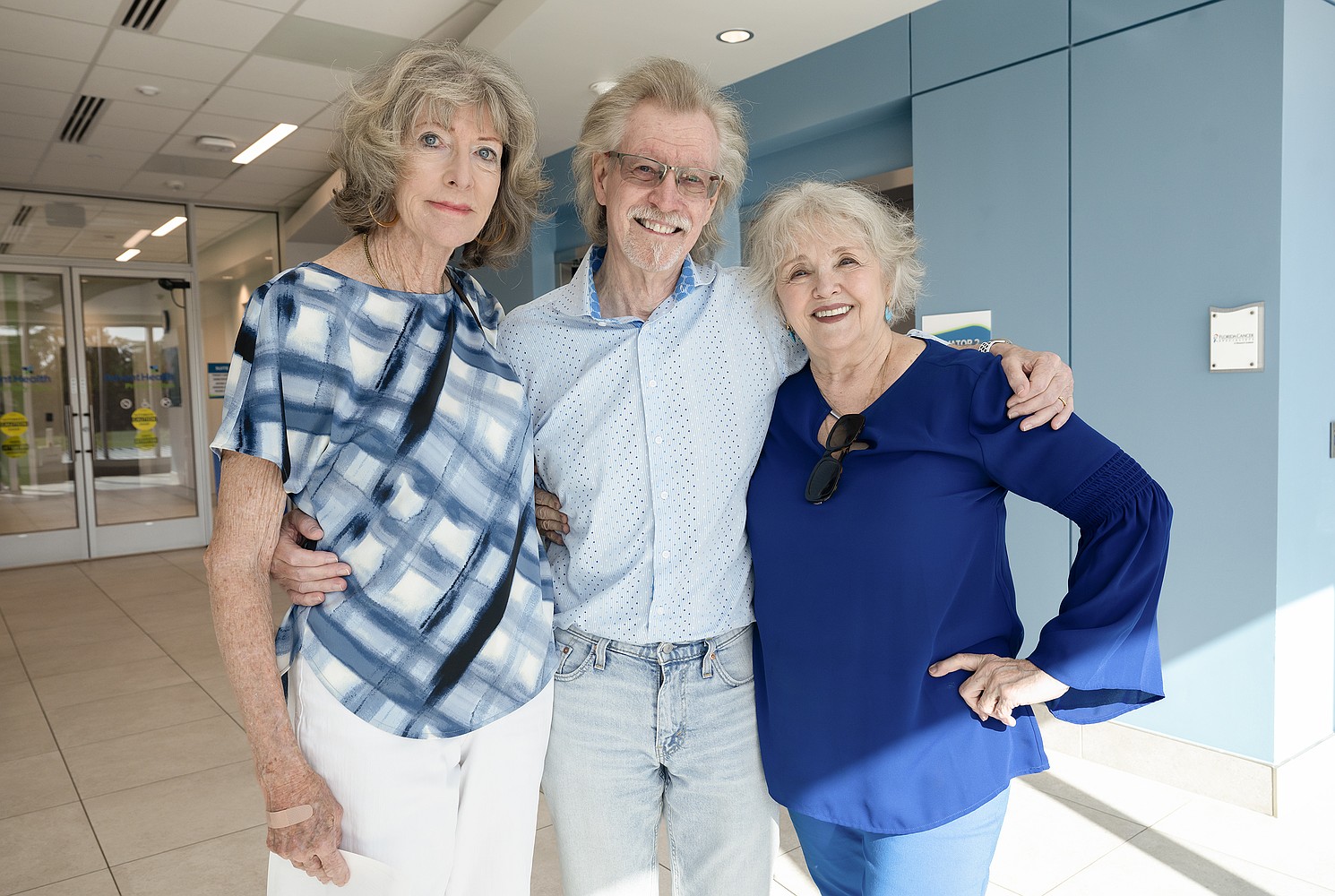
On Wednesday, Sept. 16, Shirk donated his painting “Chemo” to the Florida Cancer Specialists & Research Institute, where he receives his treatment.
Click the magnifying glass, double-tap, or pinch to zoom
Photos by Michele Meyers / Ormond Beach Observer, except the painting and bell courtesy photos.
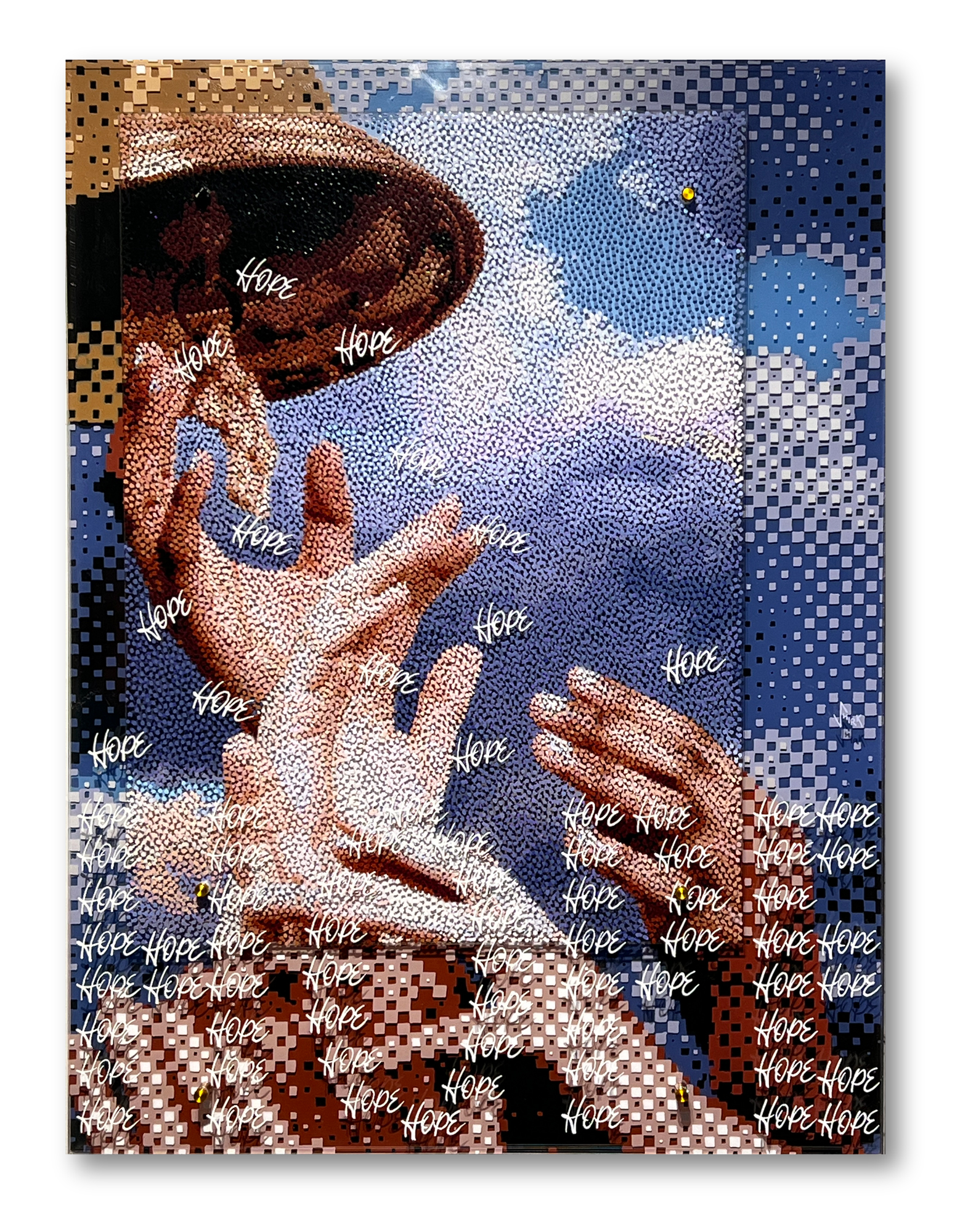
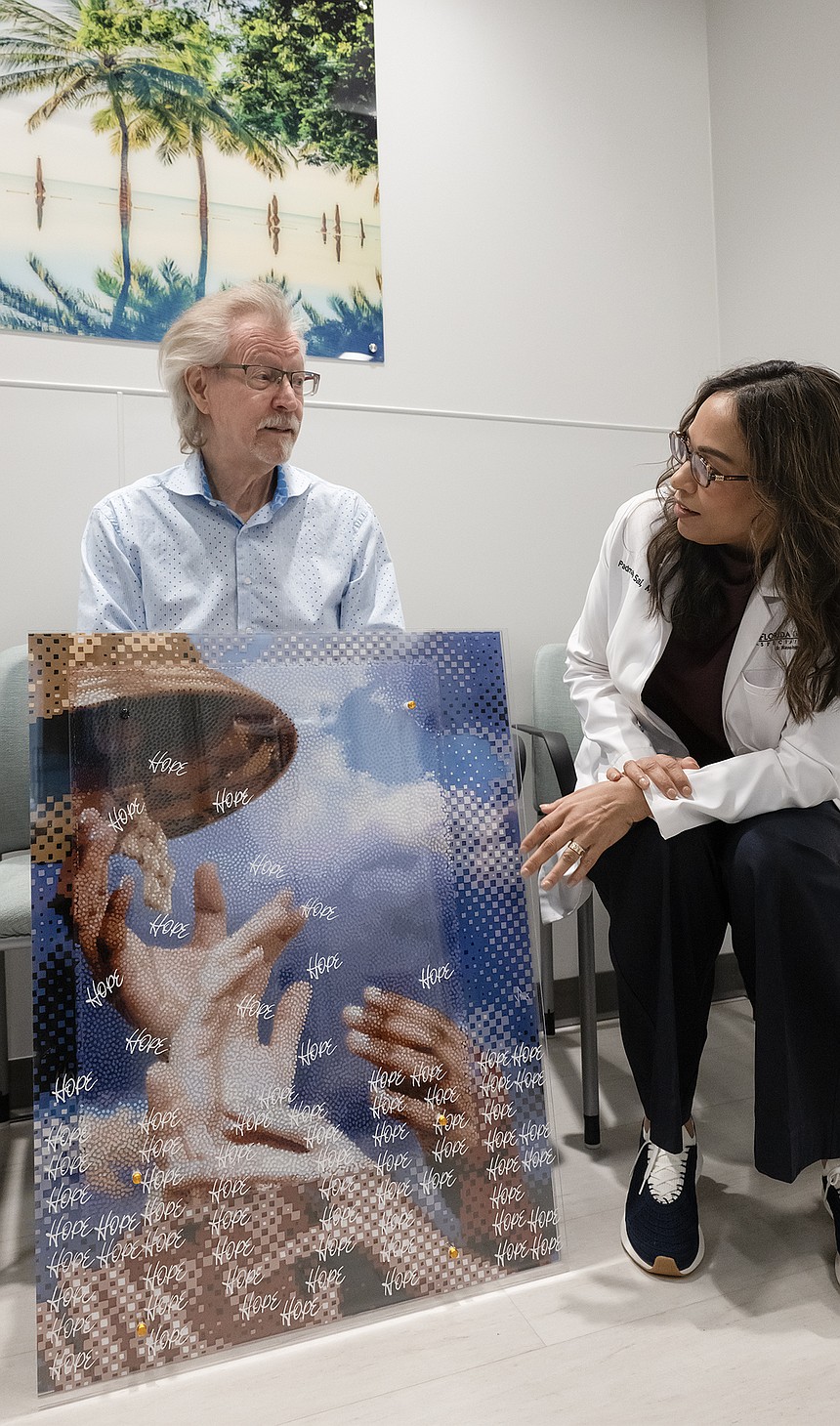
Artist Robert Shirk’s painting “Chemo” embodies hope.
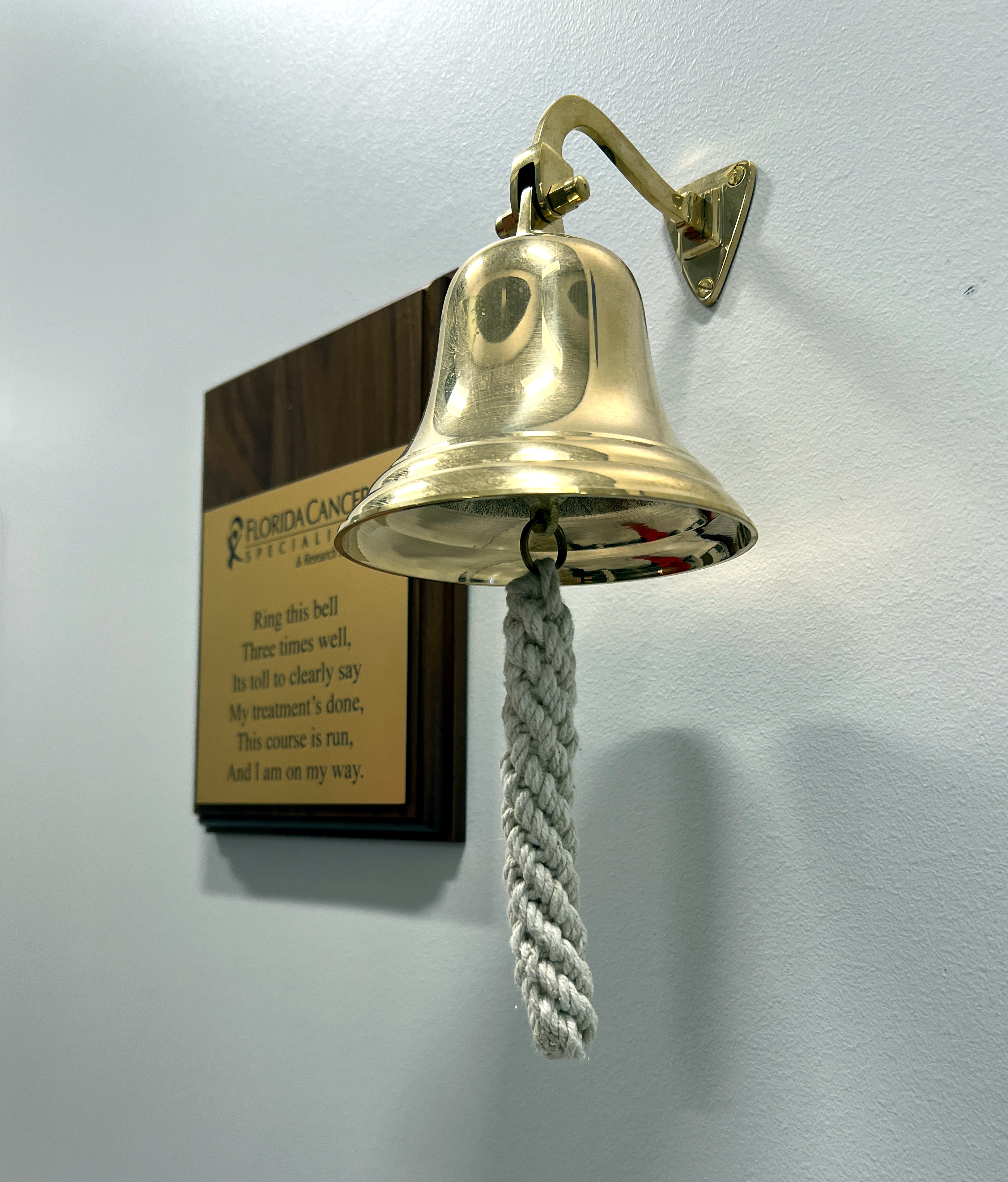
Hands reach toward a bell surrounded by the word hope, replicated throughout the image and nestled in a sky of dots, inspiring the viewer to embrace the word’s meaning and strive to ring the bell, a symbol of the milestone those undergoing cancer treatment wish to be able to do one day.
Shirk, of Ormond Beach, donated the painting to the Florida Cancer Specialists & Research Institute in Palm Coast on Wednesday, Sept. 16. His artwork is on display in a seating area where patients can garner inspiration from its message, whether they are there for an initial oncology appointment, to receive treatment, or return for a follow-up.
In April 2025, Shirk was diagnosed with stage 4 gallbladder cancer. The first line of treatment? Chemo.
“Chemo really tore me down,” he said. “But the prognosis for this cancer is not good. When they first told me, I had like six months. That was it. That’s what I had.”
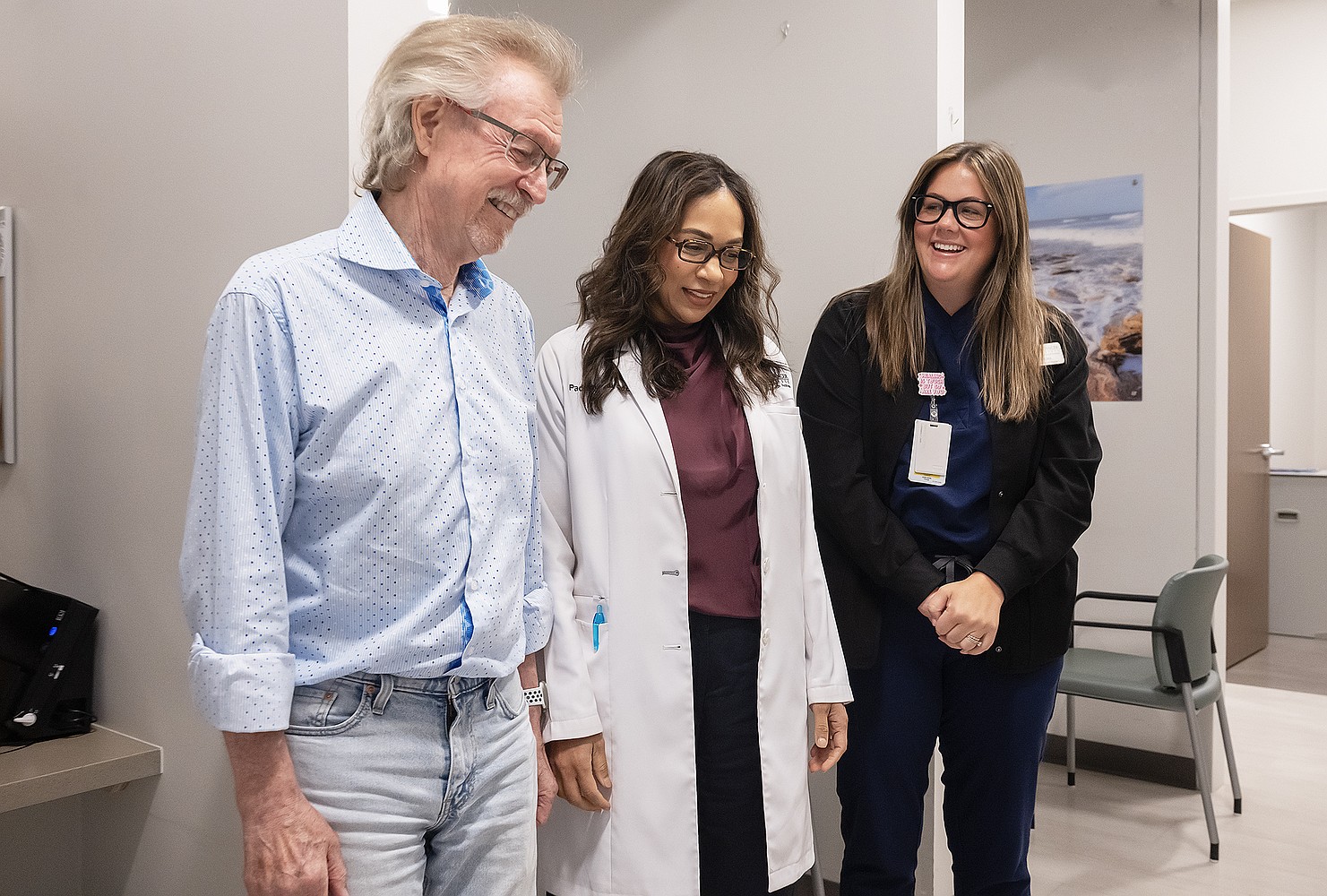
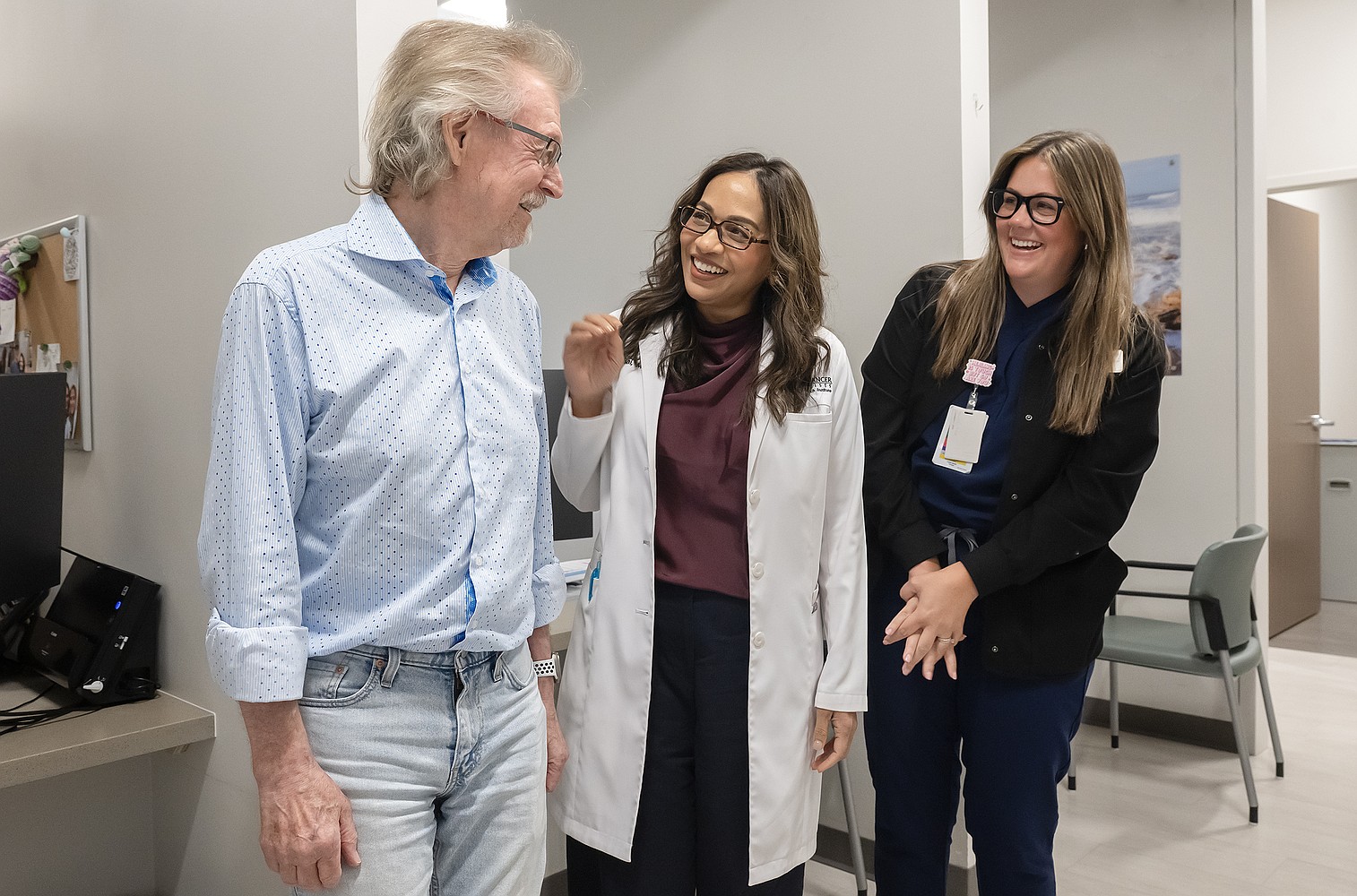
Shirk’s painting resonates with hope for patients and their families, said Dr. Padmaja Sai, oncologist and hematologist at the Florida Cancer Specialists & Research Institute in Palm Coast.
“It’s about hope, and hope is the most important thing for every one of us,” said Sai, who celebrated her 20th anniversary with the institute on Sept. 1.
Originally from India, Sai did her residency and fellowship training in New York, and moved to Florida in 2004. She went to medical school wanting to become a surgeon. During clinical rotations, she felt connected to medical oncology and knew that was where her heart belonged.
“Even in general, even for me, waking up in the morning and being able to take care of these patients, and coming to the office, and going back home and getting a good night’s sleep — we all hope that happens,” Sai said. “We all hope we wake up in the morning.”
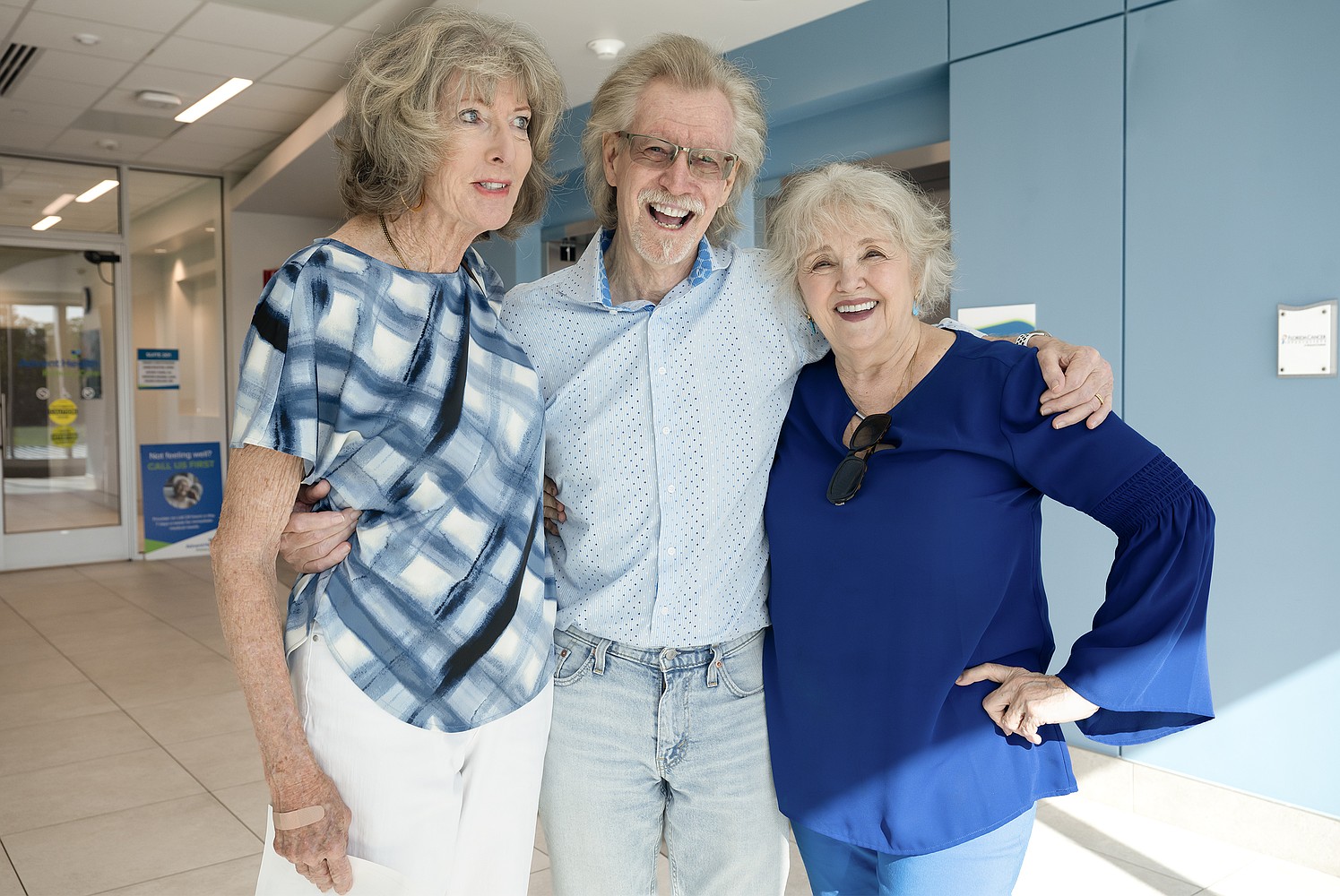
During Easter weekend last year, Shirk said he noticed his skin was turning orange. He asked his wife, Loleita, what she thought. After he stepped onto the patio and opened his shirt, she confirmed his skin had a slightly orange discoloration.
As soon as his gastroenterologist learned of his symptoms, he advised him to go to the AdventHealth Palm Coast Hospital emergency room immediately, where Shirk was admitted for testing. Staff ran a myriad of tests, including a blood panel, and performed MRIs and CT scans.
Dr. Abubaker Ali sat down with the Shirks to speak about the diagnosis, telling them that he was a surgeon, but could not do anything for Shirk. The cancer had spread to his liver, lungs, and lymph nodes. According to Ali, it was everywhere.
“I just said, ‘Wow,’” Shirk recalled. “The physical part actually is out of my hands in the sense that I’m relying on the doctors, but it’s in my hands when I have to select the doctors; after that, it’s not. Mentally, it definitely is an adjustment. There’s no doubt about that. It changes your perspective on a lot of things.”
In Shirk’s case, the doctors believe the cancer started in his gallbladder and went undetected for some time. It spread to his liver, blocking bile excretion and causing his jaundiced skin. The gastroenterologist put in a stent to open the clogged bile duct. Shirk’s liver and blood tests started getting better, and his skin returned to normal, but he still had cancer.
While Shirk was in the hospital, Ali looked at his paintings online and encouraged him to share his cancer experience through his art. Shirk was surprised.
“I’m like, ‘Are you kidding me?’” Shirk said. “It was the last thing I wanted to do. There was no way.”
For two and a half months, Shirk endured chemotherapy. It took its toll. He lost at least 15 pounds and was often bedridden.
Shirk wasn’t giving up though. He knew he wanted to pursue immunotherapy through research he had done on his own. So his doctors and patients recommended Sai. She started him on new medication that had just been approved by the FDA and is now ongoing targeted antibody therapy.
He’s almost cancer-free, Sai said.
His recent imaging showed stable findings and no progression. More importantly, she said, he is maintaining his quality of life and doing what he really loves — his art, his painting.
“Over the years, the treatment has changed,” Sai said. “He’s getting targeted therapies, and we also have immunotherapy. All this clinical research has transformed what is possible now. A few years ago, if he had come to me, the treatment was not there. What is now possible was unimaginable then.”
“It’s about hope, and hope is the most important thing for every one of us.”
— Dr. Padmaja Sai, Florida Cancer Specialists & Research Institute
It took six months for Shirk to feel well enough to consider painting again. Once he decided to start, he had to address a new dilemma: what to paint.
“I was totally out of my element as far as being inspired, and things had different meaning,” he said. “My whole perspective had changed.”
He was checking out at Sai’s office when he saw the bell hanging on the wall with the inscription, “Ring this bell three times well, its toll to clearly say my treatment’s done, this course is run, and I am on my way.”
He knew then that he wanted to create art that reflected the hope needed to ring that bell and inspire others to keep fighting their diagnoses.
It took Shirk six weeks to research different elements, put them together, and paint “Chemo.” It is painted on six layers of plexiglass in the neo-pointillism style using tiny dots. Each layer is painted in dots using a different acrylic color, creating the illusion of movement.
The painting is dedicated to individuals battling cancer, with hopes that they complete their therapy and ring the bell.
Shirk’s “Chemo” was the winner of the Most Creative Award in the Saint Augustine Artist Association “Honors Show” and the winner of the Achievement Award in the Art League of Daytona Beach Juried Exhibit, “The Way I See It.”
After his diagnosis, Shirk said he is painting what he wants to paint.
“I tell artists you can do both,” he said. “You don’t have to just paint to sell. Put aside a little time and just do it for yourself because that’s really important. You don’t want to lose the enjoyment of what you’re doing.”
Sai said Shirk resonates with hope and his dream of continuing to paint.
“What impressed me was how he chose this painting to hang in the office so that every patient looks at it, and for a moment they think, ‘Hey, you know what? There is hope.’”
If diagnosed with advanced cancer, Sai said, do not lose hope. Cancer care has changed dramatically over the years with the addition of precision medicine, targeted therapies, clinical research, newer innovations, and immunotherapy.
“They’ve transformed what was impossible into something that can be possible,” she said. “I’m proud to be with this place that brings all these advances to these patients in this community. It’s a privilege to care for patients at a time when so much research is happening. I am incredibly proud of what we have accomplished, and I’m even more hopeful about what’s coming ahead.”
Source: Michele Meyers, Ormond Beach Observer / Observer Local News, Sept. 30, 2026.
Read the original Observer article
|
See the painting page